


Most people hear the word Schedow and feel a little confused. It sounds like something technical or a new kind of app. But the truth is much simpler. Schedow is just a smart, easy way to plan your day without stress. It helps you stay organized, stay calm, and still get important things done—even on days when life feels messy.
In this long, clear guide, I’ll walk you through everything about Schedow in simple English, the way a friend would explain it. You’ll learn what it means, how it works, and why so many people are searching for it these days. You’ll also get tips, examples, and easy steps you can follow right away.
Think of this as your “real life” explanation—not something full of hard words or complicated theories.
What Is Schedow?
Schedowis a mix of two words: schedule and workflow.
It means a calm, flexible way to plan your day. It doesn’t use strict time rules. It doesn’t force you to do 20 things in one day. It doesn’t make you feel guilty if plans change.
Instead, the Schedow method gives you space to breathe. You choose a few important tasks. You give yourself flexible time blocks. And you go through your day in a natural flow, not a strict timeline.
In simple words:
👉 Schedow is a gentle planning style that fits your life instead of fighting it.
It works for people who want to stay organized but don’t want to feel stressed or overwhelmed every day.
Why Are So Many People Searching for “Schedow”?
Life today moves fast. One day is simple, the next day is full of sudden tasks. A lot of people feel tired of long to-do lists and complicated planners that look good but are hard to follow.
That’s why Schedow is becoming popular.
People want:
-
Calm planning
-
Flexible routines
-
More balance
-
Less pressure
-
A simple way to stay on track
The Schedow system gives all of this without making your life harder. It’s made for “real days,” not “perfect days.”
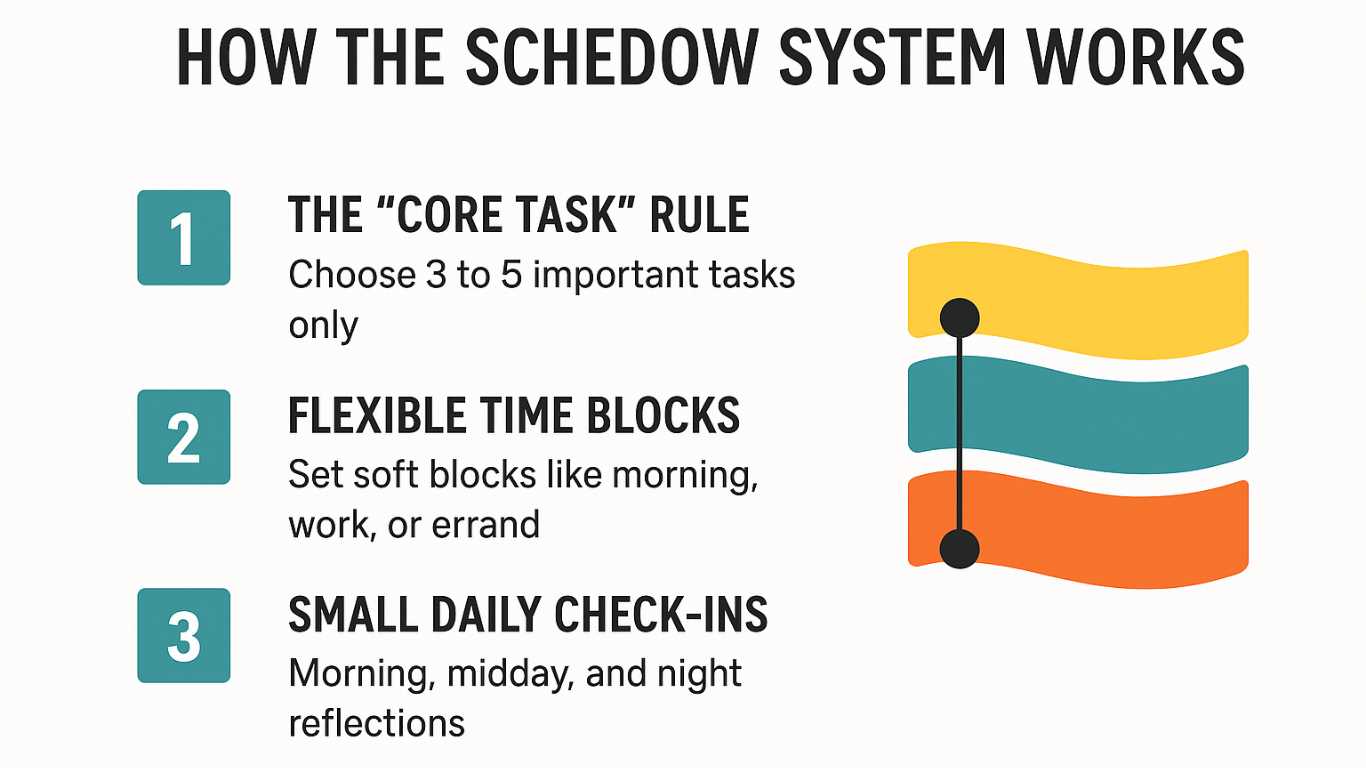
How the Schedow System Works
Schedow is built on three simple ideas. These ideas make it easy to follow and easy to stick with.
1. The Core Task Rule
Instead of writing 20 tasks and finishing none, Schedow asks you to choose 3 to 5 important tasks only.
These tasks are the heart of your day. If only these get done, the day is still successful.
People call them:
-
Main tasks
-
Priority tasks
-
Anchor tasks
When you reduce the number, your brain relaxes and focus becomes sharper.
2. Flexible Time Blocks
Schedow uses time blocks, but not in a stressful way.
You don’t say “9:00 sharp I must do this.”
Instead, you create soft blocks like:
-
Morning block
-
Work block
-
Study block
-
Errand block
-
Evening block
You move inside these blocks based on your energy and mood. This makes planning feel natural, not forced.
3. Small Daily Check-Ins
Schedow has a small rhythm:
-
Morning: set your plan
-
Midday: adjust if needed
-
Night: reflect on what worked
These tiny check-ins help you stay on track without pressure.
What Makes a Schedow Day Feel Different?
A Schedow day doesn’t feel rushed or stuffed with work. Instead, it feels calm and balanced because you only focus on what truly matters. You’re not fighting against the clock, and you’re not stressing over a long list you can’t finish. Everything moves in a smooth flow.
You start your day with a clear idea of your main tasks, and you handle them when your energy feels right. You don’t force yourself into strict timings, so there’s less pressure. You get the important things done, but you still have space to breathe, think, and relax.
A Schedow day feels lighter, simpler, and more natural—almost like your day fits you, not the other way around.
Benefits You Will Notice When You Use Schedow
Using Schedow can really change the way your days feel. Here are the main benefits you’ll notice when you start using this simple planning method:
Your mind feels lighter
You no longer carry the stress of a long to-do list. By focusing only on the most important tasks, your brain can relax and think clearly.
You get more meaningful work done
Instead of spreading yourself too thin on small, unimportant tasks, you focus on what really matters. This makes your day more productive and satisfying.
You feel more relaxed
There’s no strict schedule breathing down your neck. Schedow lets you work at your own pace, reducing pressure and tension.
Your day flows naturally
Your tasks match your energy levels instead of forcing you into a rigid routine. This makes your day feel smoother and easier to manage.
It works for everyone
Whether you’re a student, parent, freelancer, or office worker, Schedow adapts to your lifestyle and daily responsibilities.
You get better balance in life
With realistic planning and flexible blocks, you can balance work, personal time, and rest. Life starts to feel more organized and under control.
How to Use Schedow (Easy Step-by-Step Guide)
You don’t need any special tools to start Schedow. Here is the simplest way to begin.
Step 1: Pick Your Main 3–5 Tasks
These should be tasks that truly matter. Not small things. Not random chores. Only the tasks that move your day forward.
For example:
-
Finish assignment
-
Clean your room
-
Prepare business proposal
-
Do a workout
-
Study one chapter
Step 2: Make Your Soft Time Blocks
Block your day in a gentle way:
-
Morning Block: plan, reset, small tasks
-
Focus Block: study or work
-
Afternoon Block: emails, errands, light tasks
-
Evening Block: relaxing, reading, family time
No fixed minutes. Just a smooth flow.
Step 3: Follow the Flow, Not the Clock
Schedow respects your energy.
Feeling fresh?
Do your focus work.
Feeling tired?
Switch to lighter tasks.
This makes planning feel natural.
Step 4: Midday Adjustment
Spend two minutes checking:
-
What is done?
-
What can move?
-
What needs a little more time?
This keeps your day realistic.
Step 5: End-of-Day Reflection
At night, gently review:
-
What went well?
-
What felt difficult?
-
What should change tomorrow?
Reflection is the strength of Schedow.
Tools You Can Use for Schedow
Schedow works on anything:
Digital tools:
-
Google Calendar
-
Notion
-
Apple Notes
-
Trello
-
Todoist
Paper tools:
-
Simple notebook
-
Bullet journal
-
Printed planner
Hybrid style:
Many people use digital systems for schedules and paper notes for core tasks. This mix works beautifully with Schedow.
Who Is Schedow Good For?
Schedow is perfect for people who:
-
Feel overwhelmed by long lists
-
Work from home
-
Study long hours
-
Run small businesses
-
Manage home + work
-
Want a calmer day
-
Prefer flexible routines
If your days are unpredictable, Schedow fits you even better.
Common Mistakes People Make With Schedow
Avoid these mistakes to get the best results:
-
Adding too many tasks
-
Being too strict
-
Using too many apps
-
Skipping review time
-
Making blocks too detailed
Remember: Schedow is meant to feel light and open—not tight and controlled.
Schedow vs Other Planning Styles
Schedow is different from common planning methods:
| Method | How It Feels | Who Likes It |
|---|---|---|
| Schedow | Light, flexible, calm | Most people |
| To-Do Lists | Overwhelming | Task-heavy days |
| Time Blocking | Strict | Professionals |
| Bullet Journaling | Creative | Artistic users |
| Digital Planners | Structured | Tech users |
Schedow works well for people who want simplicity with clarity.
Example of a Schedow Day
Morning
Tidy your room, make your bed, and plan what matters most. Have breakfast while thinking about your top 3–5 tasks. Start your day calm and focused.
Midday
Focus on your most important task first. Work on it uninterrupted. Take short breaks if needed, but stay committed to finishing the core task.
Afternoon
Handle lighter tasks like emails, messages, or small chores. These are important but less demanding, giving your brain a rest from heavy work.
Evening
Work on your second main task, then spend a few minutes reading, journaling, or reviewing your day. Reflect on successes and plan improvements for tomorrow.
Common Questions About Using Schedow
What exactly is Schedow?
Schedow is a simple way to plan your day. It focuses on a few important tasks and flexible time blocks instead of long, strict schedules.
Do I need a special app to use Schedow?
No. You can use a notebook, planner, or any digital app like Google Calendar or Notion. The method works anywhere.
How many tasks should I plan each day?
Three to five main tasks are enough. This keeps your day manageable and reduces stress.
Can students use Schedow?
Yes, it’s perfect for students. It helps focus on important assignments and study sessions without feeling overwhelmed.
Will Schedow help me feel less stressed?
Yes. By limiting tasks and using flexible time blocks, Schedow makes planning calm and realistic.
Can I use Schedow for work and personal life together?
Absolutely. You can combine work, school, chores, and personal goals in one simple routine.
How do I review my day in Schedow?
Spend a few minutes at the end of the day reflecting on what went well, what didn’t, and what to adjust for tomorrow.
Is Schedow better than traditional to-do lists?
For many people, yes. It focuses on what really matters instead of overwhelming you with long lists.
Final Thoughts
Schedow works because it’s simple, flexible, and realistic. It doesn’t try to control every minute of your day or make you feel guilty for things left undone. Instead, it focuses on the tasks that truly matter and lets you plan around your energy, mood, and life’s unpredictability.
Using Schedow, you can stay organized without stress, finish your important work, and still have time for yourself. It fits students, professionals, freelancers, and anyone who wants a calmer, more manageable daily routine.
The best part? Schedow grows with you. Start small with just a few tasks, see how it feels, and adjust your routine over time. Over days and weeks, it builds a habit of productive, balanced, and stress-free planning.
If you want a planning style that respects your life, your energy, and your priorities, Schedow is an easy and effective way to get it right.
