

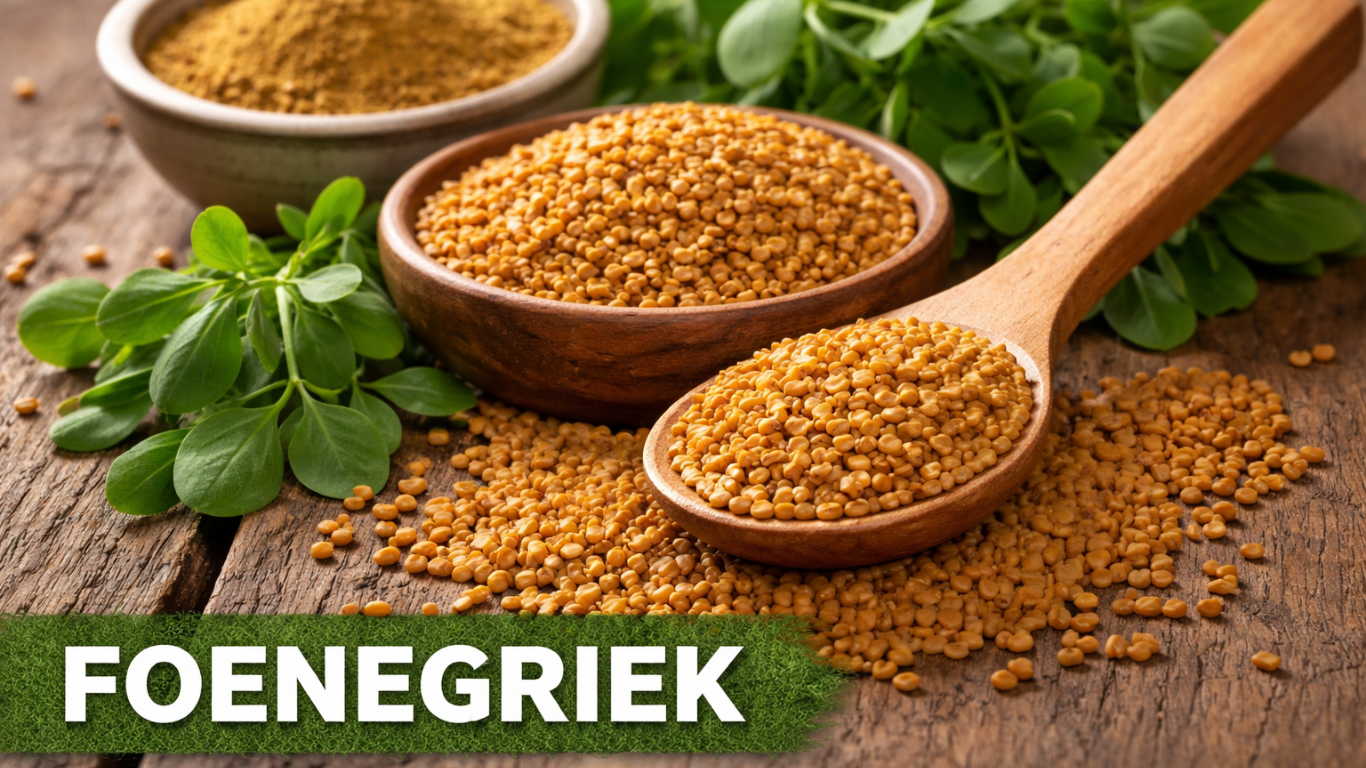
Foenegriek is the Dutch name for fenugreek— a natural herb that people use both as a cooking spice and as a traditional remedy.
It comes from the plant Trigonella foenum-graecum, which grows in Asia, the Middle East, and parts of Europe. In South Asian countries, people usually call it methi.
This plant produces small green leaves and thin pods that hold golden-brown seeds. Those seeds are the most commonly used part.
You can find foenegriek in different forms — whole seeds, powder, capsules, or fresh leaves. Each form is used for different purposes in food and health.
What Does Foenegriek Look Like?
Foenegriek grows as a small green plant that looks similar to clover because its leaves are divided into three parts.
The plant usually grows around 30 to 60 cm tall. After it flowers, it produces thin seed pods. Inside those pods are the well-known foenegriek seeds. The seeds are:
-
Small and hard
-
Golden-brown in color
-
Slightly angular in shape
-
Strong in smell
It also appears as a yellowish-brown powder with a strong aroma. Fresh leaves are bright green, while dried leaves look darker and more fragile.
No matter the form, it always comes from the same plant — only the appearance changes.
The History of Foenegriek
Foenegriek has been used for thousands of years.
Ancient Egyptians used it for medicine and even in burial practices. Greeks used it for animal feed and herbal treatments.
In India, it has long been part of Ayurvedic medicine for digestion, strength, and overall wellness. Traditional Chinese medicine also included it for digestive support and kidney health.
Because many cultures trusted it for centuries, it has built strong traditional credibility over time.
Nutritional Value of Foenegriek
One reason foenegriek is so popular today is its rich nutritional content. It contains:
-
High dietary fiber
-
Plant-based protein
-
Iron
-
Magnesium
-
Manganese
-
Vitamin B6
-
Antioxidants
-
Natural plant compounds like saponins
The fiber content is especially important. It plays a big role in supporting digestion, blood sugar balance, and cholesterol control. That natural nutrition is why people still use it as part of daily meals and wellness routines.
Health Benefits of Foenegriek
1. Supports Blood Sugar Balance
One of the most studied benefits of foenegriekis its effect on blood sugar.
The fiber and natural plantcompounds slow down how quickly carbohydrates break down and enter the bloodstream. Because of this, blood sugar spikes after meals may be reduced.
Some small studies show improvement in fasting blood sugar levels among people with type 2 diabetes who use controlled amounts.
However, it is not a replacement for medication. It works best as support alongside proper diet and medical guidance.
2. Helps Lower Cholesterol
It may also support heart health by improving cholesterol levels. It contains natural compounds called saponins. These compounds may reduce cholesterol absorption in the gut.
Lower LDL (bad cholesterol) levels can reduce long-term heart risks when combined with regular exercise and balanced eating habits.
Many people include it as part of a natural heart-support routine.
3. Improves Digestion
If someone struggles with bloating, constipation, or slow digestion, it may help.
The high fiber content improves bowel movement and supports gut bacteria. It also helps keep the digestive system regular.
Some people drink soaked foenegriek seeds in the morning to improve gut health naturally.
4. Supports Breastfeeding Mothers
It is often used as a natural way to support milk production. It acts as a natural galactagogue — meaning it may increase breast milk supply.
Some small studies suggest positive effects, but results vary. Medical supervision is recommended before using it while breastfeeding.
5. Possible Support for Testosterone & Male Health
Some research studies explore foenegriek extract and its impact on male hormones. Early findings suggest it may support:
-
Energy levels
-
Strength
-
Libido
-
Hormonal balance
But research is still ongoing. More large clinical studies are needed to confirm long-term effects.
6. Supports Weight Management
Because it contains high amounts of fiber, it promotes a feeling of fullness after meals.
When you feel full for longer, you may eat less and reduce unnecessary snacking. This natural appetite control can support weight management efforts.
Still, it is not a miracle weight-loss solution. It works best when combined with balanced nutrition and regular physical activity.
Culinary Uses of Foenegriek
In South Asian Cooking
Foenegriek is very common in Indian, Pakistani, and Bangladeshi kitchens. It is used in:
-
Curries
-
Lentil dishes
-
Pickles
-
Parathas
-
Spice blends
Chefs often roast the seeds lightly before adding them to dishes. Roasting reduces bitterness and brings out a nutty flavor. Fresh leaves are also added to flatbreads and vegetable dishes.
In Middle Eastern Cooking
In Middle Eastern cuisine, You will often find it in:
-
Bread recipes
-
Spice pastes
-
Slow-cooked meat dishes
Its strong earthy aroma adds depth and warmth to food. Some people soak the seeds before cooking to reduce bitterness.
In European Cooking
In countries like the Netherlands and Germany, it appears in:
-
Specialty cheese varieties
-
Bread products
-
Unique spice blends
Some cheeses include crushed foenegriek seeds, which create a mild nutty and slightly sweet taste. Food companies sometimes use it as a natural flavor enhancer.
How to Use Foenegriek Properly

Whole Seeds
The traditional method is soaking seeds overnight.
-
Take 1 teaspoon seeds
-
Soak them in water overnight
-
Drink the water in the morning
-
You may chew the softened seeds
This method supports digestion and blood sugar control.
Foenegriek Powder
Powder is easier to mix into daily food. You can add it to:
-
Smoothies
-
Yogurt
-
Warm water
-
Soups
-
Curries
Start with small amounts because the taste is strong.
Foenegriek Capsules
Capsules are convenient for people who dislike the taste. They usually contain concentrated extract. Always:
-
Follow label instructions
-
Avoid exceeding dosage
-
Ask a doctor if you take medication
Scientific Evidence Behind Foenegriek
Research shows foenegriek has real biological effects.
Blood Sugar Research
Many studies suggest it may improve blood sugar control by slowing carbohydrate absorption. However:
-
Most studies are small
-
Some are short-term
-
More research is needed
It should support — not replace — medical treatment.
Cholesterol & Heart Studies
Studies show possible reductions in LDL cholesterol. This benefit comes from fiber and plant compounds that reduce cholesterol absorption. More long-term trials are still required.
Hormonal Research
Some research explores its effect on testosterone. Early results show possible improvement in:
-
Strength
-
Energy
-
Libido
But evidence is still developing.
Possible Side Effects
Foenegriek is natural — but that does not mean zero risk. Possible side effects include:
-
Mild diarrhea
-
Gas or bloating
-
Allergic reaction
-
Low blood sugar
-
Maple-like body odor
Pregnant women should avoid high doses. People on medication should consult doctors first.
Who Should Avoid Foenegriek?
Be careful if you:
-
Use insulin or diabetes medication
-
Take blood thinners
-
Have hormone-sensitive conditions
-
Are pregnant
Medical advice is important for safety.
How Much Foenegriek Should You Take?
There is no fixed universal dose. Common guidance:
-
1 to 2 teaspoons seeds daily
-
500 to 1000 mg extract capsules
Start small and adjust slowly.
Common Questions About Foenegriek
What is foenegriek used for?
Foenegriek is used as a spice in cooking and as a natural remedy for digestion, blood sugar support, and overall wellness.
Is it safe to use daily?
In small amounts, it is generally safe for most people. Always avoid high doses and consult a doctor if needed.
Can foenegriek help with diabetes?
Some studies suggest it may help control blood sugar, but it should not replace prescribed medication.
Does it increase breast milk?
Many mothers use it to support milk production, and some report positive results.
What are the side effects of foenegriek?
Possible side effects include mild stomach issues, gas, low blood sugar, or a maple-like body smell.
Final Thoughts on Foenegriek
Foenegriek is both a traditional spice and a modern wellness herb. It supports:
-
Blood sugar balance
-
Digestion
-
Cholesterol health
-
Breastfeeding support
-
Possible hormonal balance
But it is not magic. Results depend on lifestyle, diet, and proper usage. When used carefully and consistently, foenegriek can become a powerful addition to your kitchen and health routine.
Always remember — natural products work best when combined with smart health choices.
