

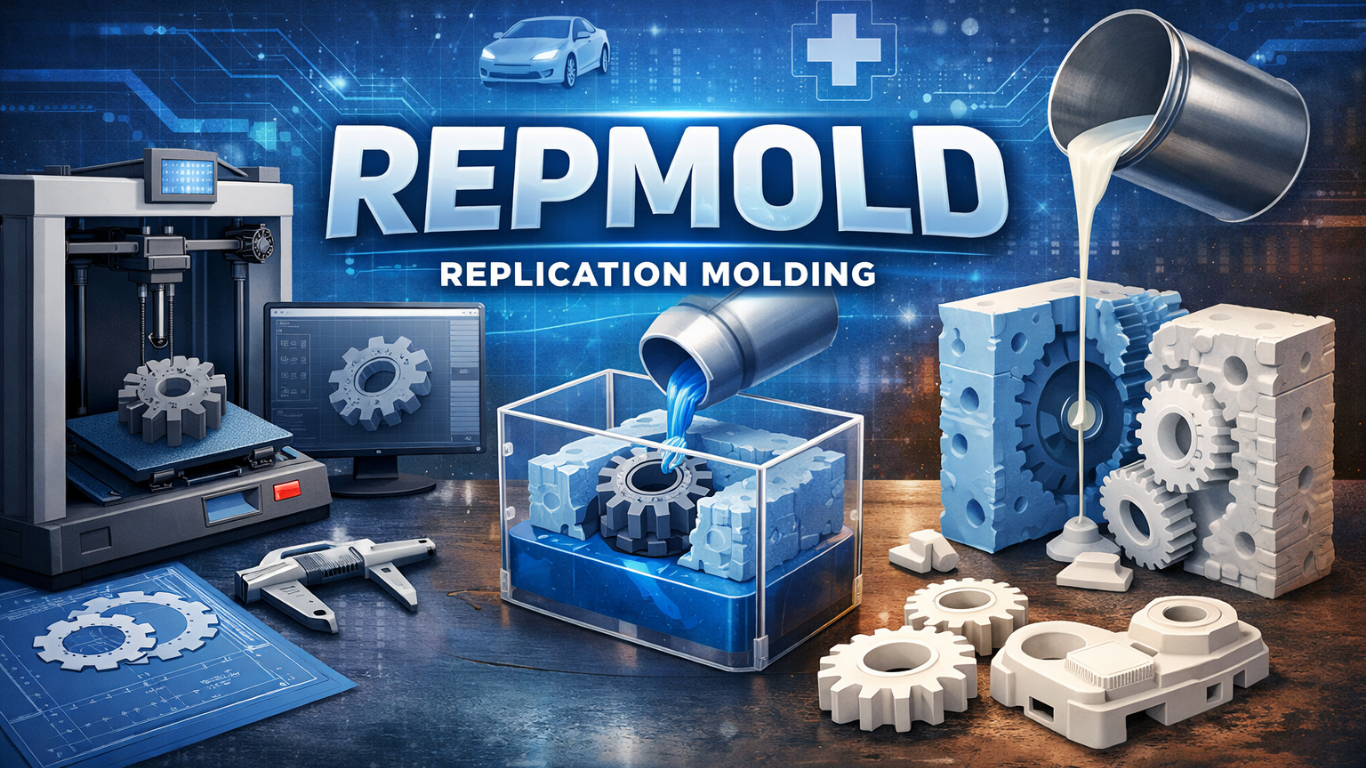
Repmold is a word many people are seeing more often these days, especially in articles about manufacturing and product design. At first, it can sound confusing or very technical. But when you really look at it, repmold is actually a simple idea. It is about making molds in a smarter, faster, and cheaper way.
In the past, making molds took a long time. It also cost a lot of money. Today, companies want things faster and easier. That is why repmold has become popular. It helps people make the same part again and again without stress, waste, or delay.
What Is Repmold?
Repmold means replication molding. In simple words, it is a way to copy the shape of a part and make many similar parts from it.
Instead of cutting heavy metal molds, repmold uses:
-
Digital design
-
3D printing
-
Soft or semi-hard mold materials like silicone or resin
The goal is simple. Make a mold quickly. Use it to produce parts that look and fit the same every time.
You can think of repmold like using a cookie cutter. Once the cutter is ready, every cookie comes out with the same shape. Modern molds works in a similar way, just with modern tools.
Why People Use Repmold Today
Life is faster now. Businesses cannot wait months to test an idea. Customers want products quickly. Mistakes cost money.
Repmold helps because:
-
It saves time
-
It costs less than traditional molds
-
It gives steady results
-
It is easier to change designs
Many teams face problems when parts don’t match or prototypes keep failing. Once they switch to this method, production usually becomes smoother. Parts start fitting better, and the workflow feels more controlled. That’s why more companies are adopting it in their processes.
How Repmold Works (Step by Step)
Repmold works in a clear and practical way. You do not need to be an engineer to understand it. The process follows a few simple steps that turn an idea into a real, usable part.
Step 1: Create the Design
Everything starts with a design. The part is drawn on a computer using simple design software. Sometimes, an existing object is scanned instead of drawn. This digital design shows the exact shape and size of the final part.
Step 2: Make the Master Model
Once the design is ready, a master model is created. This is usually done with a 3D printer. The master is the first physical version of the part. It does not need to be perfect, but it must match the final shape closely.
Step 3: Prepare the Mold
The master model is placed inside a frame or box. Then, mold material such as silicone or resin is poured around it. This material slowly hardens and takes the exact shape of the master.
Step 4: Remove the Master
After the mold material fully sets, the master model is carefully removed. This leaves an empty space inside the mold that matches the part’s shape perfectly.
Step 5: Create the Final Parts
The mold is now ready for use. Liquid material is poured into the mold. After it cures and hardens, the part is removed. This step can be repeated many times to create identical parts.
Step 6: Clean and Finish
The final parts are cleaned, trimmed, and checked. Small edges are removed, and the surface is smoothed if needed. Once finished, the part is ready for testing or use.
How Repmold Is Different From Old Mold Methods
Traditional molds are usually made from metal. They are strong, but they are slow to make. They also cost a lot. If something goes wrong, fixing it is difficult.
Repmold is different because:
-
It uses lighter materials
-
It is faster to produce
-
It allows easy changes
-
It reduces waste
For short runs and testing, repmold makes more sense than heavy tooling.
Materials Used in Repmold
Repmold can work with many materials. The choice depends on how strong the mold needs to be and how many parts will be made.
Common materials include:
-
Silicone for flexible molds
-
Resin for strength and detail
-
Polyurethane for fast setting
-
Composite materials for heat resistance
Each material has its own use. A good choice makes the mold last longer and work better.
Where Repmold Is Used
Repmold is not just for big factories. Its flexibility and speed make it useful in many industries and situations. Anywhere you need consistent parts, fast prototypes, or small production runs, repmold can help. Here’s where it is commonly used:
Automotive Industry
Car makers use it to produce interior panels, dashboards, and custom fittings. It allows them to test new designs quickly and make small batches without expensive metal molds.
Medical Field
Hospitals and medical device companies rely on it for dental molds, prosthetics, surgical guides, and lab tools. Its precision ensures parts fit the human body properly.
Consumer Electronics
It’s perfect for making casings, buttons, and small gadgetcomponents. Companies can test designs and prototypes before full-scale production.
Packaging and Product Design
Companies making packaging or product prototypes use repmold to create containers, bottles, and decorative parts. This allows designers to test shapes and styles quickly and make changes easily.
Education and Research
Schools and labs use it to teach students about design and manufacturing. It’s a low-cost way to practice making molds and parts without industrial equipment.
Small Workshops and Startups
Even small businesses and independent creators benefit. They can produce high-quality items at lower cost and try new ideas without expensive mistakes.
Industrial Tools and Components
Factories also use repmold to make small or specialized tools, jigs, and fixtures. These molds help speed up production processes and ensure that parts fit together precisely.
Benefits of Using Repmold
Using repmold comes with many real advantages for both small and large manufacturers. It is not just a fancy tool—it solves everyday problems in production and design. Here are the main benefits you can expect:
1. Faster Production
Speed is one of the biggest advantages. Traditional molds can take weeks or months to finish. With this modern method, molds and parts can be ready in just a few days. This is especially useful for tight deadlines or testing new designs quickly.
2. Lower Costs
This approach is much cheaper than traditional metal molds. Expensive machines aren’t needed, and materials like silicone or resin cost less. The process uses fewer resources overall, making it affordable for startups or small teams.
3. Consistent Quality
When a mold is made correctly, every part produced from it looks and fits the same way. This consistency reduces errors, scrap, and rework. Fewer mistakes save money, time, and stress for everyone involved in production.
4. Easy Design Changes
One of the best things about repmold is flexibility. If you want to tweak a design, you do not have to start from scratch. You can update the digital model, make a new master, and create a new mold quickly. This makes it perfect for prototyping and testing multiple ideas.
5. Less Waste
Accurate molds mean less material is wasted. Failed parts are fewer, molds last longer, and many materials can be reused or recycled. This makes the process more eco-friendly than older methods.
6. Supports Small and Large Projects
Repmold works for any size of project. Small businesses can use it to make a few parts at low cost. Large companies can use it to produce complex components reliably. This adaptability makes it a practical tool for everyone.
7. Helps With Innovation
Because it’s fast and flexible, it encourages experimentation. Designers can try new shapes or complex designs without worrying about high costs or long delays, leading to more creativity and better products.
Product Quality With Repmold
With repmold, every part produced is consistent in size and shape. This reduces mistakes and ensures that all components fit together perfectly. Consistent results mean less rework, fewer defects, and higher customer satisfaction across production batches.
It also improves surface finishes and detail accuracy. Fine edges, textures, and intricate designs are reproduced reliably. This precision helps manufacturers maintain high standards without extra effort, making products look professional and work as intended.
A well-maintained system supports long-term reliability. Parts stay uniform even after multiple production runs. Teams can trust the process, plan better, and avoid costly delays, boosting both efficiency and the overall quality of every item made.
Problems That Can Happen With Repmold
Repmold is useful, but it is not perfect.
Some common issues are:
-
Mold wear after many uses
-
Heat damage if used incorrectly
-
Surface marks if not cleaned well
These problems are normal and can be reduced with care and experience.
How to Take Care of Repmold Equipment
Good care makes a big difference.
Simple habits help:
-
Clean molds regularly
-
Store them properly
-
Control heat and pressure
-
Train workers correctly
With basic care, repmold setups can last a long time.
Repmold and the Environment
Repmold helps reduce waste in manufacturing. Because molds produce consistent parts, fewer materials are thrown away. Mistakes are minimized, so energy and resources are used more efficiently, making production cleaner and more sustainable.
Many repmold materials, like silicone and resin, can be reused for multiple parts. This means less trash and fewer raw materials needed. Smaller production runs also lower energy use compared to traditional metal molds, which take more power and time to create.
Local production is another environmental benefit. Companies can make molds and parts closer to where they are needed. This reduces shipping, cuts carbon emissions, and supports eco-friendly practices, all while keeping costs down and maintaining high-quality output.
The Future of Repmold
Repmold is growing fast, and the future looks bright. New tools and smarter materials are making molds stronger, faster, and easier to use. Production will become even quicker, with fewer mistakes and less waste.
We can expect more automation in repmold processes. Machines may monitor molds, adjust temperatures, and even predict when a part might fail. This will make production safer and more reliable while reducing human error.
Sustainability will also improve. Companies will use eco-friendly resins, recycle molds, and produce locally. Combined with digital design and AI, repmold will continue shaping manufacturing into a faster, greener, and smarter process for businesses of all sizes.
Common Questions About Repmold
What is repmold used for?
It is used to make molds and repeat parts quickly and accurately for production or prototyping.
Is repmold expensive?
Not really. It costs less than traditional metal molds and saves money over time.
Can small businesses use repmold?
Yes, even startups and workshops benefit from it.
How long does a repmold last?
With proper care, it can last several years depending on material and usage.
Can repmold make detailed or complex shapes?
Yes, modern systems can reproduce fine details and complex shapes.
Final Thoughts
Repmold is a simple but powerful way to make molds and parts faster, cheaper, and more reliable. It helps both small businesses and big factories get consistent results without wasting time or materials.
By combining digital design, 3D printing, and flexible materials, repmold makes production smoother and more predictable. Teams can focus on improving ideas instead of fixing mistakes, which saves energy, money, and effort.
Looking ahead, repmold will keep growing with smarter tools, better materials, and more automation. It is not just a method—it is shaping the future of manufacturing, making it faster, cleaner, and more creative for everyone.
