

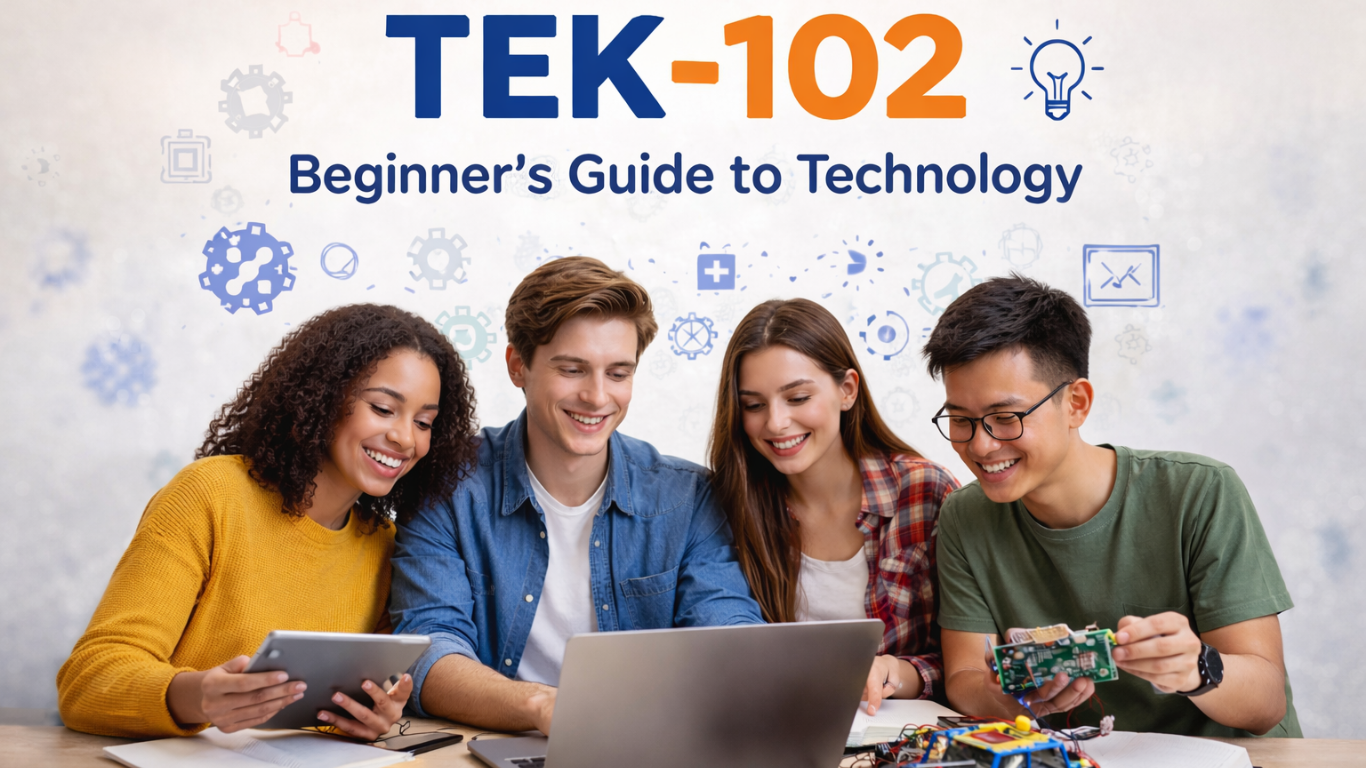
Technology is everywhere, from smartphones and laptops to apps and online tools. Many people use these devices daily without understanding how they work. TEK-102 helps learners explore technology, programming basics, and responsible digital use in a simple, practical way.
The course is designed for anyone curious about technology. Students from all backgrounds, including non-technical learners, benefit. Whether you’re a college student, professional, or adult learner, TEK-102 introduces essential digital skills that are useful in school, work, and everyday life.
What Is TEK-102?
TEK-102 is a beginner-level technology course that explains computing, systems, and programming fundamentals. It helps learners understand how technology works behind the scenes, without requiring prior technical knowledge or experience.
The course focuses on four main areas: understanding digital systems, basic programming skills, systems thinking, and ethical technology use. It equips learners with practical knowledge and confidence to handle technology effectively in real-life scenarios.
Why TEK-102 Is Important
Many people use technology daily without understanding its impact. TEK-102 teaches students how digital systems function, how decisions affect outcomes, and how to act responsibly in digital spaces. It bridges the gap between users and creators.
Students learn critical thinking, digital literacy, and problem-solving. The course helps learners communicate with technical teams, make ethical technology choices, and apply knowledge practically. These skills are valuable for education, work, and personal projects.
Who Should Take TEK-102
TEK-102 is suitable for almost anyone with curiosity and commitment. Ideal learners include college students from any major, high school STEM students, adult learners, entrepreneurs, and career changers who want foundational technology knowledge.
No prior experience is needed. The course is beginner-friendly, with simple explanations and hands-on practice. Students gradually build skills in programming, systems, and ethical technology, making TEK-102 a practical starting point for anyone entering the digital world.
Skills You Gain in TEK-102
Students gain a mix of practical and analytical skills. They learn systems thinking, logical problem-solving, and how technology components interact. Coding basics in Python or Scratch enhance computational thinking.
Ethical awareness is also emphasized. Learners understand data privacy, responsible technology use, and digital sustainability. Teamwork skills develop through group projects, making students confident in collaborative environments and professional settings.
TEK-102 Course Modules
1. Systems and Engineering Basics – Learn what systems are and how components work together. Students understand real-world applications of systems thinking.
2. Digital Logic and Binary – Covers binary numbers, logic gates, and Boolean concepts, the foundation of computing.
3. Programming Fundamentals – Students write small programs using Python or Scratch, focusing on logical thinking, not memorization.
4. Technology and Society – Examines how technology impacts jobs, privacy, environment, and ethical considerations.
5. Hands-On Projects – Students build simulations, circuits, or software to apply theory in practice.
6. Emerging Technology Overview – Introduces artificial intelligence, IoT, and cloud computing for future readiness.
How TEK-102 Helps in Real Life
TEK-102 teaches skills that can be applied immediately. Understanding apps, devices, and systems helps learners make informed decisions about privacy and usability.
Logical thinking and problem-solving skills transfer to school projects, workplace challenges, and daily life. Students can communicate clearly with tech teams and make better decisions in digital environments.
Tools Used in TEK-102
Modern TEK-102 classes use simple, beginner-friendly tools. Coding is often taught with Python or Scratch. Simulations are done on Tinkercador CircuitLab. Arduino and Raspberry Pi are used for hardware experiments.
Collaboration and assignments use platforms like GitHub, Google Classroom, or Canvas. These tools give students real-world experience while staying beginner-friendly and approachable.
What a Typical TEK-102 Week Looks Like
A typical week balances lectures, labs, homework, and group work. Lectures introduce concepts, while labs provide hands-on practice. Assignments reinforce learning through coding, documentation, or ethical case studies.
Group discussions or projects allow students to collaborate and improve communication skills. This structured yet flexible schedule helps learners progress steadily without feeling overwhelmed.
Challenges Students May Face
Beginners sometimes struggle with technical terms, coding errors, or teamwork in group projects. TEK-102 provides guidance through practice, online resources, and instructor support to help overcome these challenges effectively.
Patience, regular practice, and clear communication are key. Most students adapt quickly and gain confidence in understanding digital systems, programming, and ethical decision-making.
Ethics and Responsibility in TEK-102
Ethics is a major part of the course. Students learn about data privacy, algorithm bias, sustainability, and fair technology use.
Discussions and case studies show how tech decisions affect society. Learners develop critical thinking and responsibility, becoming informed and ethical users, not just passive consumers of technology.
The Future of TEK-102
As technology evolves, TEK-102 updates too. Future courses may emphasize AI basics, cybersecurity, green computing, and online learning.
Micro-credentials and digital certificates may allow learners to showcase their skills professionally. This keeps TEK-102 relevant and valuable for students entering the digital world.
Common Questions About TEK-102
What is TEK-102?
beginner-friendly course teaching technology basics, programming, and ethical tech use.
Do I need experience?
No. TEK-102 for beginners starts from the basics.
Who can take it?
College students, high school students, professionals, and adult learners.
Is it useful in real life?
Yes. Skills apply to jobs, school, and daily technology use.
What topics are covered?
Systems thinking, coding, digital logic, ethics, hands-on projects, and emerging technologies.
Final Thoughts
TEK-102is a simple, practical course that teaches technology clearly and responsibly. It helps learners understand systems, code, teamwork, and ethics in the digital world.
Whether you are a student, professional, or beginner, TEK-102 provides the foundation to navigate technology confidently, make smart decisions, and prepare for the future.
